Vampire Facial (Platelet-Rich Plasma – PRP)
A Vampire Facial, medically referred to as Platelet-Rich Plasma (PRP) facial rejuvenation, is an advanced regenerative skin treatment that uses the patient’s own blood components to stimulate collagen production, improve skin texture, and promote overall skin rejuvenation.
PRP therapy harnesses the body’s natural healing processes to improve skin quality, tone, elasticity, and hydration, making it a popular option for clients seeking a natural approach to skin rejuvenation without synthetic substances.
How PRP Works
Platelet-rich plasma is derived from the patient’s own blood. Platelets play a key role in tissue repair and regeneration and contain high concentrations of growth factors, including platelet-derived growth factor (PDGF), transforming growth factor (TGF), and vascular endothelial growth factor (VEGF). These growth factors stimulate:
• Collagen and elastin production
• Cellular regeneration
• Improved blood supply to the skin
• Tissue repair and healing
When introduced into the skin, PRP enhances skin renewal and improves overall skin health.
Treatment Process
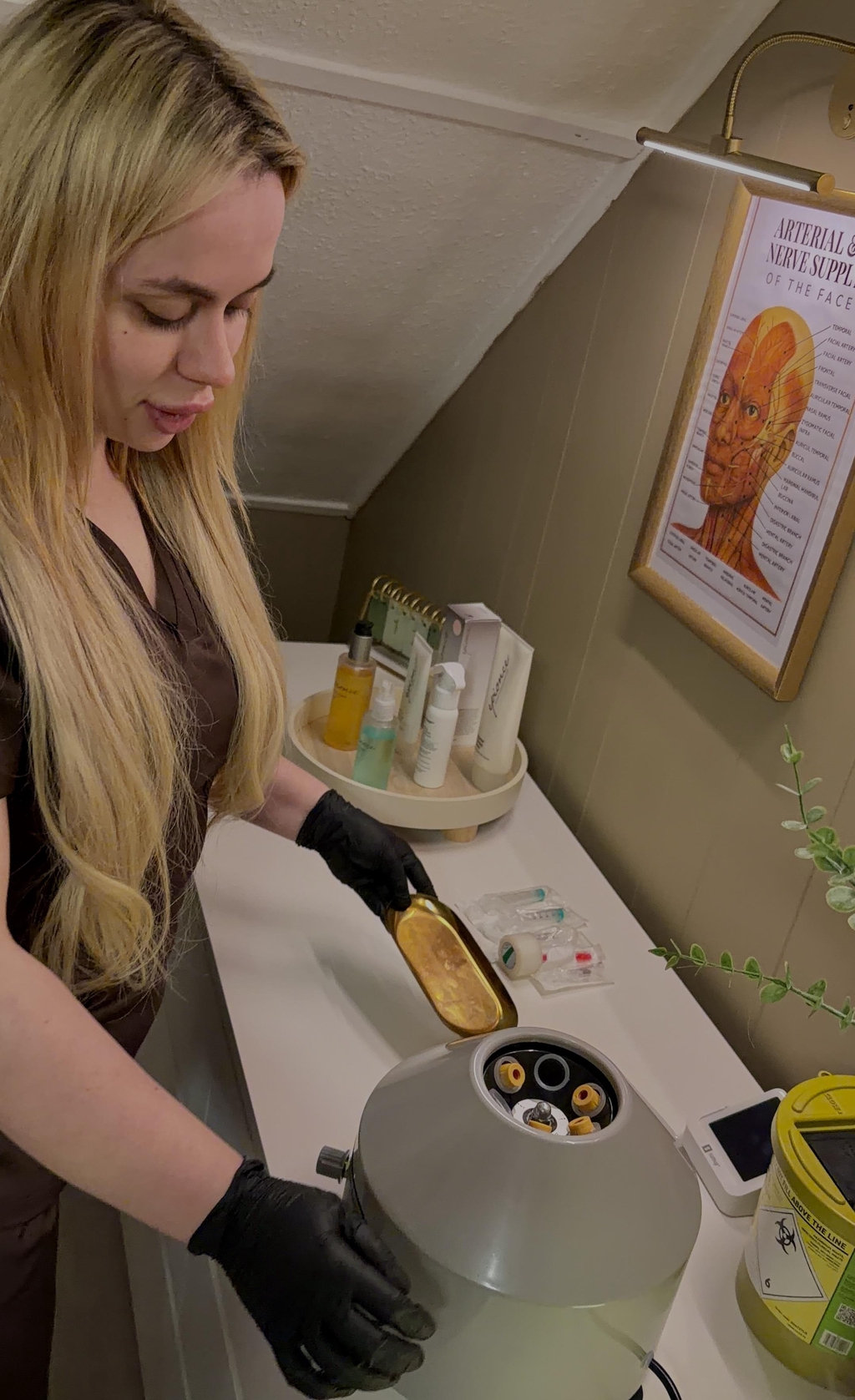
The treatment begins with a small blood sample being taken from the client, similar to a routine blood test. This sample is then placed into a medical-grade centrifuge, where it is spun to separate the platelet-rich plasma (PRP) from the other components of the blood. Once prepared, the skin is thoroughly cleansed and a topical numbing cream is applied to minimise discomfort. The PRP is then either micro-needled into the skin or injected superficially into targeted areas, allowing the platelet-rich plasma to penetrate the skin and stimulate the body’s natural regenerative and healing response.
Expected Results
Results are gradual and progressive, as PRP works by stimulating natural collagen production rather than providing immediate volume.
Clients may notice:
Improved skin texture and toneIncreased firmness and elasticityReduction in fine linesImproved skin hydration and luminosityHealthier, more youthful-appearing skin
Initial improvements may be seen within 2–4 weeks, with continued improvement over 8–12 weeks as collagen production increases.
Treatment Course & Longevity
For optimal results, a course of 2–3 treatments spaced approximately 4–6 weeks apart is usually recommended.
Results can last up to 12 months, depending on individual factors such as age, skin condition, lifestyle, and adherence to aftercare.
Maintenance treatments may be advised annually.
Side Effects & Risks
PRP is generally considered a low-risk treatment as it uses the patient’s own blood, reducing the risk of allergic reaction. However, as with any injectable or skin-penetrating procedure, side effects may occur.
Common Side Effects
RednessSwellingMild bruisingTenderness or sensitivityPinpoint bleeding (from microneedling)
These effects are usually mild and resolve within 24–72 hours.
Less Common Side Effects
Prolonged swellingInfection (rare when performed correctly)Temporary hyperpigmentation (more common in darker skin tones if aftercare is not followed)
Contraindications
PRP treatment may not be suitable for individuals who:
Are pregnant or breastfeedingHave blood disorders or clotting abnormalitiesHave active skin infections or inflammation in the treatment areaAre undergoing chemotherapy or immunosuppressive therapyHave severe anaemiaHave platelet dysfunction syndromes
A full medical consultation is required prior to treatment to assess suitability.
Aftercare
Following treatment, clients are advised to:
Avoid touching or applying makeup to the treated area for 12–24 hoursAvoid excessive heat, sun exposure, saunas, and strenuous exercise for 24–48 hoursUse gentle skincare products onlyAvoid active ingredients (retinol, acids) for 5–7 daysApply SPF daily once skin has settled
Detailed aftercare instructions will be provided post-treatment.